
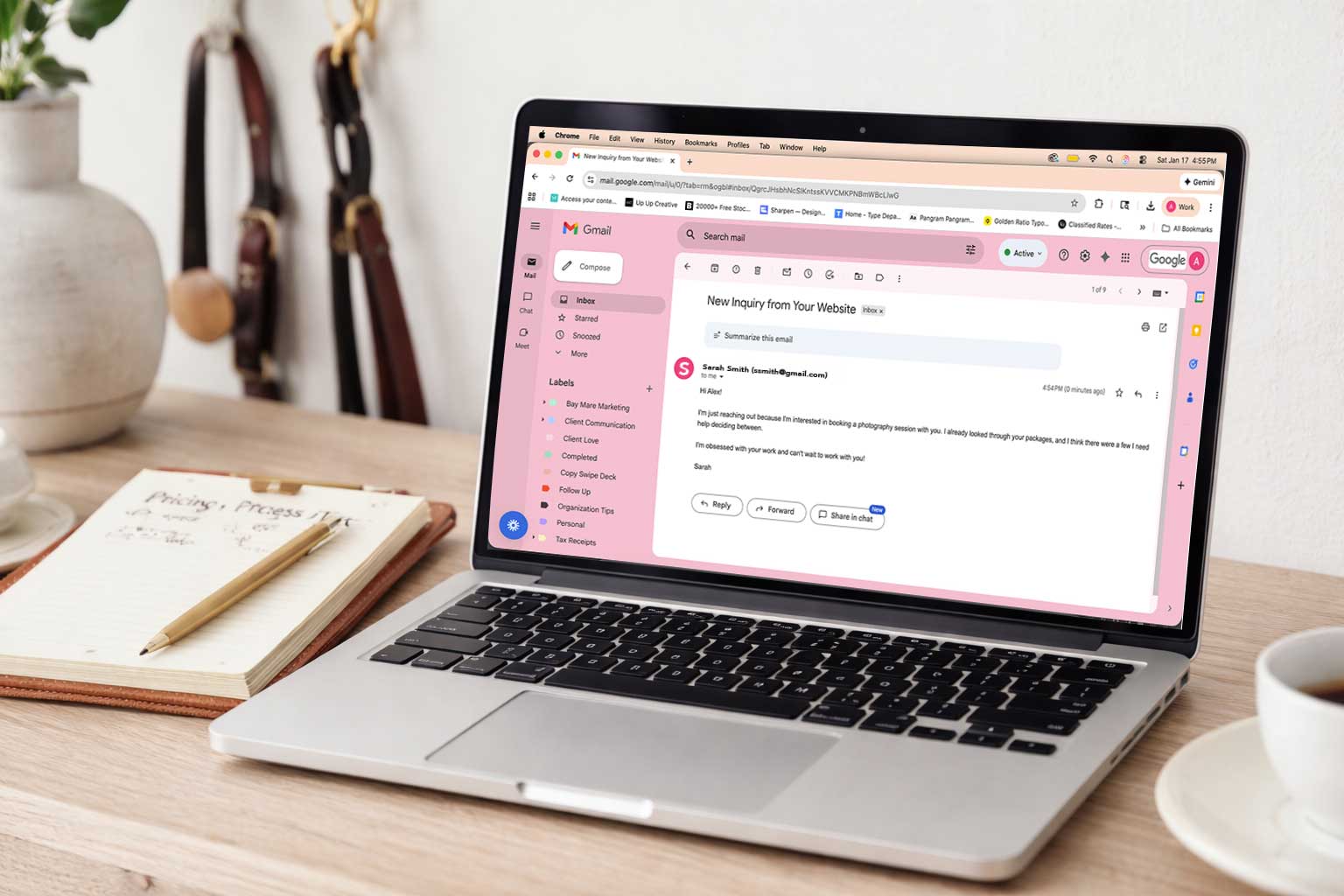
I remember when I first started building websites for equine businesses. I was so excited (and yes, a little desperate) for work that I took on anything that came my way. I think I sold my first brand + website package for $500, which basically amounted to like… $5 per hour.
But at least I was getting paid, so I did that for a while. Until I realized I was burnt out, underpaid, and working with clients who had zero respect for me. I wasn’t a designer to them. I was a glorified assistant who happened to be good at building websites. And that’s exactly how they treated me.
No shame to these clients. It was mostly my fault. I had no idea who I was trying to attract, so I pretty much just settled for anyone who’d throw some money at me. Sound familiar?
Whether you’re just starting out or you’ve been at this for years, it’s really easy to get caught up in the cycle of taking on clients who don’t value you and work that drains you – all while trying to push away the nagging sense that you could do so much better.
So. Today, we’re going to learn how you can get BETTER clients for your equine business (whether you’re a hunter/jumper trainer or a bodyworker, or something in between).
You’re going to figure out how to stop relying on luck or endless Instagram posting, and start attracting clients who actually appreciate you and what you do for their horse.
Ready? Let’s jump in.
Before we go into the how, let’s make sure we’re on the same page about the who. A great client isn’t just someone who pays on time (though that’s a nice start).
She’s someone who trusts you enough to follow your lead without questioning every decision. And she actually gets excited about you and your work. She treats you like an expert rather than someone on her team that she needs to manage.
That’s who we’re building toward. Now let’s talk about how to find her.
If someone reached out today, would you know immediately whether they’re a hell yes client… or a headache?
If not, your marketing isn’t the problem. Your clarity is.
(If you want to skip reading and jump right into a resource designed to help, you should check out the Dream Buyer Blueprint)
Before you can show up in the right places with the right message, you need to understand what’s actually going on in her world. What problem is she trying to solve? What’s keeping her up at night about her horse, her business, or both?
It all starts with the problem. Because once you know what she’s struggling with, you can figure out where she’s going to go looking for answers.
Let’s look at a real world example for bodyworkers.
Amanda pulls out her 12 year old gelding for a Saturday morning jump lesson. She starts warming up and notices that he feels just a little stiff. She can’t quite tell where, but she feels it. Her trainer doesn’t see anything major and thinks he might have tweaked himself in turnout. She makes it through the lesson, but can’t stop thinking about the stiffness.
So she goes home — or maybe starts right there in the barn aisle — and starts searching for answers.
Where is she searching? What is she typing into Google? If she’s a hunter/jumper adult amateur, she might be posting in the Plaid Horse Amateur Lounge asking other ammys what they think. She might be Googling “horse stiff after turnout” or “why does my horse feel stiff at the trot.”
That’s where you need to be. That’s the content you need to create. When you know what she’s searching for and where, it’s so much easier to show up and help.
Once you know what she’s struggling with and where she’s looking for help, you need to make sure you’re showing up there with the answers.
And I’m not saying you need to whip out your textbook and start giving her detailed reasons about why her horse is stiff. Not everyone understands tendons and muscles — even if you think they should. You need to lay things out in her language, in a way she can understand and connect with.
So for Amanda, your message needs to be tailored around her. Instead of:
“I offer 1-hour PEMF sessions for $100.” “New joint supplement for sale.”
Try this:
“Is your horse struggling with stiffness during your ride? Your initial session comes with a full eval so we can check for tight muscles and put a plan together to get him feeling loose and happy again.”
Same service. But now Amanda feels like you wrote that specifically for her.
If you want to go deeper on messaging, read this next: 7 Generic Phrases That Are Costing Your Equine Business Clients
Knowing who your dream client is, understanding her problem, and speaking to it in her language means nothing if the rest of your business tells a completely different story.
The most common disconnect I see? Someone who is completely dialed in on Instagram — posting helpful content in the right words, with the right tone — but the moment someone clicks over to their website, it feels like a totally different person built it. The words get science-y and devoid of personality. The warmth disappears. It feels like two separate businesses, and that’s confusing.
I also see it in person. You meet someone at a barn or a show and get great vibes — she’s knowledgeable, personable, and exactly who you’d want working with your horse. But when you go looking for her online later, none of that comes through. Her website is clunky and unconvincing and sounds nothing like her.
Now imagine the opposite.
She discovers you on Instagram, follows along, and heads to your website. Everything is consistent. The messaging is the same, the aesthetic is the same, the content is the same — just more in depth. Credibility oozing off of every page.
Or she sees a Facebook ad for your online course. The graphics are stunning and the wording is precise. She clicks through and finds your website, and everything matches exactly.
It all works together. And from every moment she encounters you, you’re solving her problem and consistently showing up in a way that makes her feel — yes, this is for me.
First — you’re not terrible at what you do. It’s actually the opposite. You’ve put real work into building something, you just skipped a few steps in the foundation. You never got clear on who you actually wanted or what they were struggling with, which meant you ended up with inquiries from people who didn’t quite value you the way they should.
But here’s the good news: now you know how to fix it.
Here’s where to start depending on where you are:
If you don’t know who your dream client is yet, that’s your first step. I built the Dream Buyer Blueprint specifically for equine business owners to figure out exactly who they want to work with and how to attract them. [Check it out here.]
If you know who she is but your messaging isn’t landing, read this next: [7 Generic Phrases That Are Costing Your Equine Business Clients]
