
If you’re trying to figure out why your content isn’t quite landing with your dream clients, this post is for you.
How many times have you scrolled through a competitor’s website or Instagram and seen the exact same words you’ve used on your own stuff? If it’s happened more than once, it’s probably because you’re stuck using messaging that you see everywhere – and automatically think it’ll work for you.
Here’s the thing. Most equine business owners are usually really good at what they do. But they recycle the same words and content they see everywhere online because they think that’s the fast track to get them clients + sales.
But when you sound like everyone else, there’s really no reason for anyone to pick you. And if they’re not picking you because you’re special, you’re likely ending up with:
Here’s the thing: you don’t need a new logo. You don’t need to post every day. You don’t need to become a marketing person.
You need specific messaging. The kind that makes the right people think, “Oh. This is exactly what I need! Where do I buy?”
1. "DM me for pricing"
2. "Quality care for every horse"
3. "Offering personalized/custom sessions"
4. "Passionate about horses"
5. "Results-driven"
6. "All disciplines welcome"
7. "High quality products"
8. "Rare/exclusive opening available"
You’ve probably got a generic messaging problem.
Generic messaging attracts generic leads. Period.
And the horse world is FULL of generic messaging. Probably because we’re a little old school when it comes to marketing, and it feels safer to do and say what everyone else is. But safe makes you blend in. And when you blend in, the only thing left to compare is price.
So… how do you stand out? You give your audience all of the things they’re really craving:
If your message doesn’t make those things obvious, your audience fills in the blanks.
And when people fill in blanks, they assume risk.
And when they feel risk, they either:
So let’s talk about what “sounds like everyone else” actually looks like and what to say instead.
This one is basically a magnet for price shoppers.
Because when your pricing is a mystery, people assume one of two things:
Say this instead:
Even if you don’t want to list exact pricing (totally fair sometimes), you can still set expectations so you’re not inviting “How much??” messages all day long.
Listen. I believe you. You probably do give the best care for every horse and pony you put your hands on. But “quality care” is vague. And vague doesn’t convert.
Say this instead:
Get specific about who you help and what problem you solve.
Examples:
Being specific with what you do and you do it for helps the right people recognize you.
“Personalized” is one of those words people use when they don’t know what else to say.
It sounds nice… and it tells the buyer nothing.
Say this instead:
Explain your process in one sentence.
This builds trust instantly because you’re showing them that you have a method behind what you do and you’re not just making it up as you go.
Again – I believe you. And I’m glad.
But most horse people are passionate about horses, and it’s not enough.
Your buyer is not hiring you because you love horses. They’re hiring you because you can help them solve something that matters to them.
Say this instead:
Tie your work to the outcome they want.
That kind of language makes people feel seen. And seen turns into booked
I get why people say this. You don’t want to narrow yourself into a corner.
But “all disciplines welcome” often reads like: “I don’t have a specialty, so I’m for everyone.” And when you’re for everyone, you attract… everyone.
Which is how you end up with clients you don’t actually want.
Say this instead:
Try a “best fit” statement.
If you sell products, “high-quality” is the fastest way to say that you threw your words together within a few minutes.
Product buyers want to know:
Say this instead:
Example:
Instead of: “High-quality hoof supplement.”
Try: “A daily hoof supplement for horses who struggle with cracking, thin walls, or slow growth especially during winter and dry turnout months.”
Now the right person can immediately think: “Oh. That’s us.”
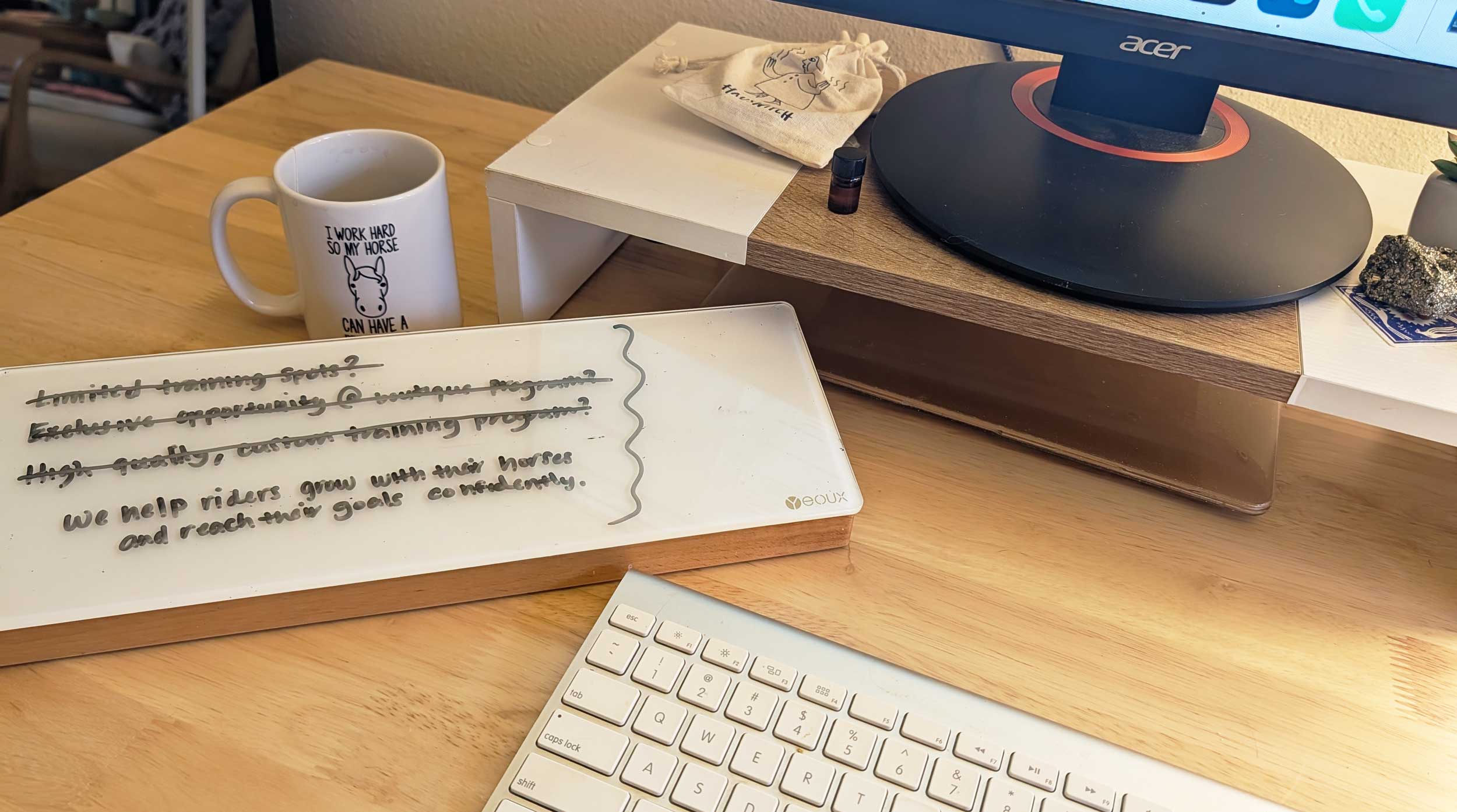
I see this one all the time with trainers and programs, and I have to wonder how it’s possible for so many barns to have “rare” or “exclusive” openings so often.
I know why you’re saying it. You want your program to feel high-value. You want people to take it seriously. You want them to move and snatch it up!
But here’s the problem: when “rare opening” shows up every few weeks, it doesn’t read as premium. It reads as marketing. And in the horse world, anything that smells even a little like a sales tactic makes people cautious.
Because honestly… if your opening was truly that rare, it would probably already be filled by someone on your waitlist.
And if you don’t have a waitlist? That’s not a shame thing. It’s just a signal that what you actually need to convey is less about scarcity and more about making sure you’re attracting the right client.
Say this instead:
Why this works: you’re still allowed to be selective, you’re just being specific and confident instead of trying to manufacture urgency. Specifics build trust. Trust fills spots.
If you want a simple way to stop sounding generic, use this:
I help [who] who are dealing with [problem] get [result] through [method], so they can [bigger win].
Here are a couple examples:
“I help adult amateurs who feel stuck in their riding get consistent progress through simple, structured training, so they can walk into the arena feeling confident instead of frustrated.”
“I help riders who are tired of trying random products find simple solutions that actually work, so they can spend less time guessing and more time enjoying their horse.”
You can tweak the wording, but the structure works because it forces you to be clear about:
That’s the difference between “pretty marketing” and marketing that books.
Once you’ve got your “specific” message, here’s where it should go:
If your message only shows up in one place, people miss it. Repetition isn’t annoying, it’s necessary.
If you’re attracting price shoppers, boundary pushers, or non-committal “just curious” inquiries, it’s usually not because you’re doing something wrong. It’s because your message is too broad for the right people to recognize themselves.
When your message is vague, the wrong people lean in.
When your message is specific, the right people lean in.
That’s the whole game.
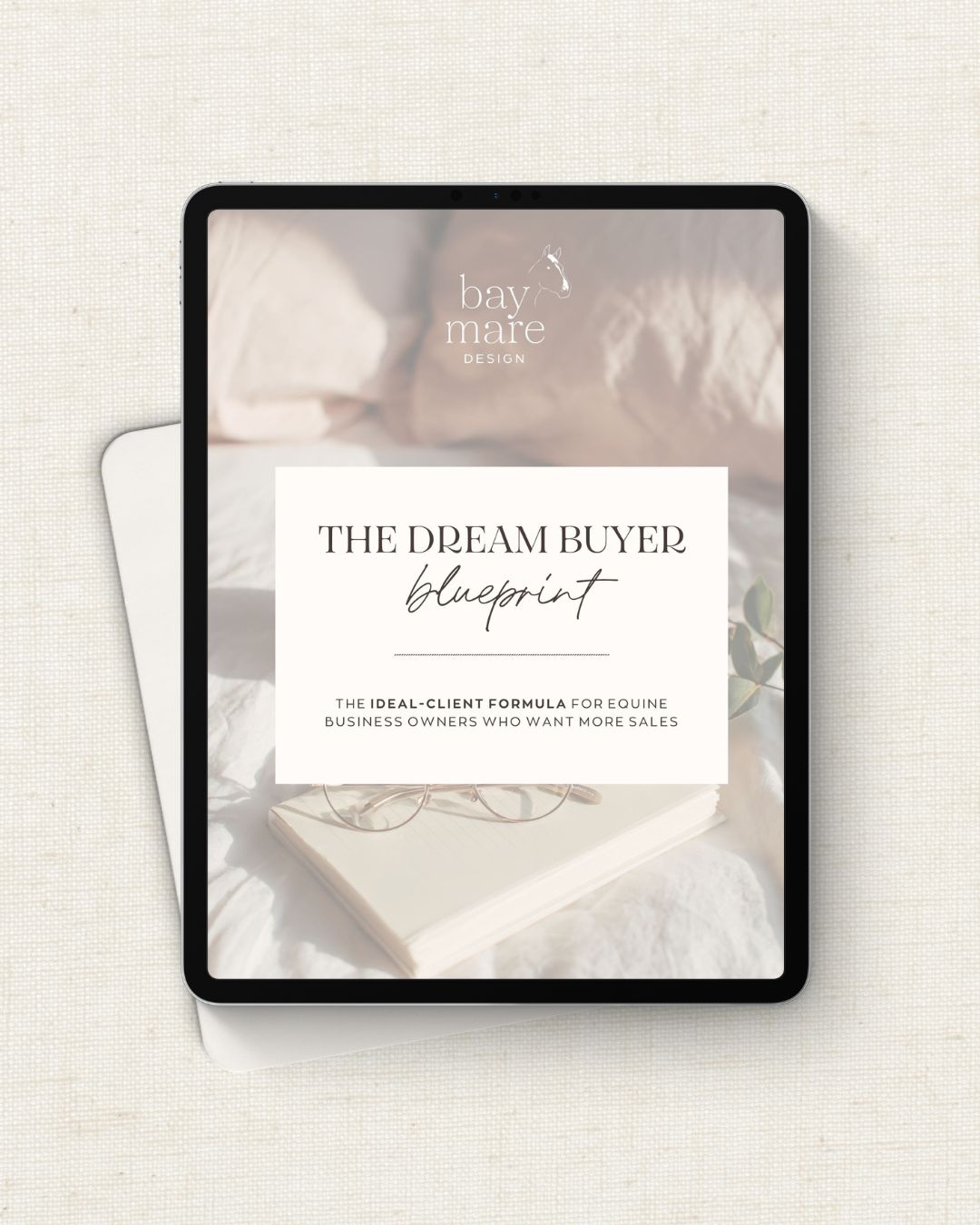
If you want to nail this in a way that actually feels clear (not overwhelming), that’s exactly what the Dream Buyer Blueprint is for.
It walks you through:
No vague “ideal client avatar” worksheets built for generic industries that make you want to scream.
Just a step-by-step process that ends with a one-page buyer profile and an “apply it” formula you can use immediately.
Because “marketing” your business doesn’t mean posting a handful of pretty photos and “open to work” captions on Instagram. You’ve got to start by figuring out exactly what you’re offering, and who it’s for. If your message is vague, the right people won’t recognize themselves, and you’ll attract low-quality leads.
A clear offer statement, who it’s for, the outcome you provide, what the process looks like, and how to start. Most “basic questions” are just signs your message isn’t obvious yet.
You should also take a look at the questions you’re regularly getting and make sure the answers are listed on your site. This will save you time!
Make your value obvious and reduce uncertainty. Price shoppers thrive when your offer, process, and standards are unclear and when your marketing makes you look interchangeable with your competitors.
You don’t have to pick a discipline niche. But you do need to be specific about the kind of clients you’re the best fit for, your standards, your style, and the problems you solve.
